Many people are considering starting a business overseas or expanding their domestic operations to international shores. If this is the case, there are several reasons to consider incorporating in Anguilla.
In addition to offering temperate climes and a beautiful, tropical setting, this Caribbean island offers favorable tax incentives for businesses that incorporate there. However, perhaps Anguilla’s most attractive feature is the ACORN system that gives you access to these tax advantages within 24 hrs.
What is ACORN?
ACORN stands for Anguilla Commercial Online Registration Network. It is an online system designed to facilitate the process of incorporating in Anguilla, allowing for the formation of business entities around the clock and from anywhere in the world.
How Does it Work?
ACORN provides a fast and efficient means of incorporating in Anguilla. Although businesses should always proceed under the advice and supervision of trusted attorneys, a qualified offshore banking and trust establishment, and perhaps overseas agents familiar with the ins and outs of doing business in Anguilla, the ACORN platform is the most expedient way to create and/or form LLCs, limited partnerships, and other types of corporations.
Once you gain access to the system, all you have to do to form your business entity in Anguilla is sign up through the website, select your company type, and proceed to fill in all applicable information through online forms. Once you’re finished and you’ve paid any associated registration fees, you’ll be issued a certificate, articles of registration and your company will be entered instantaneously into the ACORN database. Afterwards, you can access ACORN resources including company name searches, certificates of Good Standing and information on legislation etc.
Who Can Use ACORN?
There are two ways to gain access to the ACORN system:
- As a licensed Company Manager or as a licensed Trust Company in Anguilla.
- As an Overseas Agent to one of the existing local Registered Agents.
How to Register As a Company Manager or Trust Company
The registration for Company Managers and Trust companies are guided by legislation see link to Financial Services legislation here.
Both Company Managers and Trusts require the submission of an application to the Director of Financial Services for approval. For additional information, interested persons and businesses should contact the Anguilla Financial Services Commission using this site.
How to Become an Overseas Agent
ACORN allows businesses located overseas to have a virtual presence in Anguilla. As an Overseas Agent you can serve your clients needs directly with the Registry.
To become and Overseas Agent:
You must first contact a licensed Company Manager or Trust Company and establish a commercial agency agreement, as this will satisfy the requirement for a registered office in Anguilla.
You will need to apply to the Anguilla Financial Services Commission (AFSC) for approval and authorization to use the ACORN system. This is done by means of a simple application which can be downloaded here. (*$250.00 USD)
Once you have completed all the initial documents First Anguilla Trust Company Limited can help progress the application on your behalf.
It is important to note that the application form should be submitted to the Financial Services Commission through the locally based Company Manager or Trust Company that you wish to work with. Once all application and registration fees are satisfied you will be granted access to a full range of company registry services 24 hours a day, 365 days a year.
For More Information
The ACORN system is merely a platform that makes it easier and more expedient for businesses like yours to benefit from advantageous tax incentives and reach your goals of operating in Anguilla faster than ever.
If you would like more information on the ACORN system, Company Managers or working with First Anguilla Trust Company Limited as an Overseas Agent we are more than happy to answer any questions you may have.

Limited Liability Companies have become popular among small businesses because they infer both benefits of a corporation (i.e. protection for individual members) and a partnership (i.e. pass-through entity for tax purposes). This business structure offers the best of both worlds. The business entity is separate from the individuals, providing Member protection against traditional corporate liabilities, but the entity itself is not taxed, so owners/members only have to pay income tax.
Delaware LLCs operate on the same basic principles as other LLCs. However, Delaware LLCs are a bit more flexible in that Members may be, but need not be, Managers. These Managers take on no personal liability concerning the debts or obligations of the company. It is this form of LLC that has been adopted in Anguilla, making it a prime location to create an LLC and open a business.
Of course, there are plenty of benefits to be gained by Anguilla company formation. Here are just a few of the advantages Members will enjoy.
Asset Protection
The single best reason for Anguilla company formation as an LLC or any business structure for that matter is to protect personal assets from business liabilities. LLCs allow for the creation of a separate legal entity that bears the burden of liability. This, in turn, creates a legal shield for owners or members of the LLC that even lawsuits can’t penetrate (provided the company operates in a legal and ethical manner).
Pass-through Taxation
In some business structures, the company is taxed on profits and allowed to deduct losses. Employees then receive salaries which they are taxed on when filing personal income tax returns.
In other words, double taxation occurs. It’s a price many corporate entities are willing to pay for the legal protections that are part and parcel of operating as a corporation instead of a sole proprietorship or a partnership, just for example.
However, this is not the principle on which an LLC operates. In this type of entity, members are not only protected from liability, but pass-through taxation ensures single taxation by which profits pass through the business entity directly to members, who are then taxed on earnings.
Flexible Member and Management Options
Anguilla LLCs can have one owner or Member or many. Members can be Managers or not. In other words, Members have a lot of flexibility when it comes to the membership and management structure of the company.
Annual Requirements
Many corporate structures have a slew of requirements concerning recordkeeping, shareholder meetings, and so on. Whereas the Anguilla LLC is expected to keep financial records, there is no statutory requirement for an LLC to file financial statements with the Companies Registry. There is, however, a nominal annual government fee paid to ensure the LLC remains in good standing.
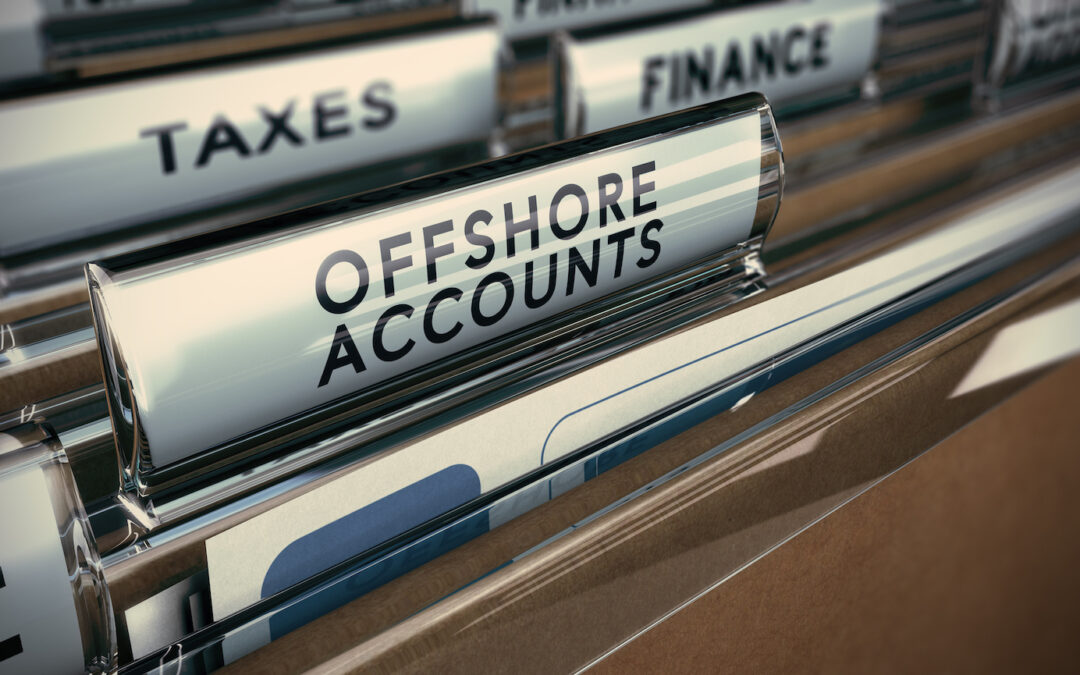
Many businesses never even consider the possibility of offshore accounts, and in most cases, it’s because they don’t understand how these accounts work or the benefits they offer. There’s also a misconception that such accounts are only for companies with excessive cash reserves.
However, these myths could be holding you back from making a savvy business decision. Here are a few important factors regarding offshore business accounts that could change your mind.
1. Dilution
As a business owner, you want to do everything you can to minimize risk. You’ve no doubt heard the saying about having all your eggs in one basket, and it can certainly apply to your business finances.
You don’t necessarily have to place all of your funds in offshore accounts, but diluting your risk by keeping money in several different types of accounts is wise, and offshore bank accounts can be part of that strategy. This is not only a smart financial move, but also a political one.
2. Asset Protection
One great reason to place money in domestic accounts is to gain Federal Deposit Insurance Corporation protections against loss. Unfortunately, these measures don’t protect your money from lawsuits.
Money held in offshore accounts is not necessarily beyond the reach of collectors, but it makes for a much harder target for seizure. You may become the victim of frivolous lawsuits or other financial attacks – offshore accounts can help you to stay afloat until such matters are resolved.
3. Minimum Deposits
Some offshore banking organizations do require minimum funds that smaller businesses will have trouble coming up with. However, this is not true in all cases, contrary to popular belief.
You’ll have to do some research to find the offshore banking institution that’s right for your company, but you can find banks that ask for deposits as low as $500-1,000 (USD) to open an account.
4. Remote Banking
The growth of online operations, including communications and security, has made remote banking not only possible, but relatively safe and reliable these days. As a result, you can open and manage your offshore accounts in a completely remote capacity, easily accessing funds that are held overseas. You can also hire a trusted management firm such as First Anguilla Trust to handle the day to day operations.
5. Fees = Guarantees
The major drawback of offshore banking for the uninitiated centers on the fees associated with many transactions. However, it’s important to understand the trade-off.
Offshore banks make their money not from lending, but from transactions and monthly fees. As a client, you’ll pay for services, but because your money is not lent out, it is always available, in full, when you need it. That’s a guarantee you won’t get from standard banks.
For more information regarding offshore accounts and banking, get in touch with us at 1-264-461-8800 or crgumbs@firstanguilla.com.
![Banking Accounts for Offshore Companies]()

Are you able to have a bank account for offshore companies? The simple answer is yes. First Anguilla Trust will help you set one up so that you can keep track of your finances and be more confident in your company’s spending. However for those who are not familiar with the process, here are some handy things to keep in mind as you go through the process.
You do have the ability to go through this process yourself, but if you have someone create the account for you then there are many advantages. One of which is that you do not have to worry about the paperwork, and the right bank can also be chosen for you and your company. Ask to see if there is a debit or credit card needed for the account and what other special circumstances may apply to you.
Here is a list of documents required to open up a corporate offshore account:
- A notarized copy of your passport
- Notarized copy of a utility bill
- A Bank Reference: This is generally a letter from your bank with an official letterhead stating that you have been with the bank for a number of years and have been an upstanding customer.
- A Professional Reference: there are some banks that require these, although they are more rare.
- Full Set of Notarized Company Documents: This includes memorandum, articles of association, certificate of good standing, and a company structure diagram.
- Detailed Business Plan
Going through a third party can help in the assembly of these documents. First Anguilla Trust has many great tools to help you through this process.
![Banking Accounts for Offshore Companies]()

Many wonder why they should bother having a trust. The truth is there are many reasons why you should set up a trust, but we have outlined the top ten for you:
- Avoid Probates. Avoiding probates can save you a lot of time, effort, money, and paperwork. Probates are when the judge has to determine the validity of the will and how everything was to be distributed. Setting up a trust would bypass this process and allow your family to access the assets quicker.
- Better Protection Against Contesting. A trust would make it harder for someone to contest an inheritance that they were not happy with.
- Distribution is Flexible. While the person creating the trust would generally outline how the funds would be distributed, there are some exceptions. If the grantor of the trust has the option to disburse in smaller amounts, if the beneficiary does not do well with larger sums.
- Paying for Higher Education. One of the many reasons that parents set up trusts is to help pay for their children’s education. It can be specified that the funds are to go toward education and once that is paid for, the extra money can be split up evenly.
- Charitable Trust. This is a popular way for people to donate to charity in a way that it can be done on a regular basis. Or they can use these to offer their land or other assets to a charity once they pass away or are no longer using it.
- Reducing Estate Taxes. Trusts can help you to reduce the taxes on your estate, which typically happens once a person has passed away and the property is being transferred.
- Dividing Assets and Property. Living trusts can help you to decide how you are going to split up property and other tricky assets. Living trusts can help to spell out who inherits property.
- Eliminate (or reduce) Family Feuds. Trusts are customizable, allowing the grantors to tailor the trust to their needs, or anyone else’s.
- Helping to Manage Affairs. Some people set up trusts so that affairs can still run smoothly even if they become disabled or have other complications due to old age.
- Privacy. There aren’t public record of trusts and do not have to go through probate, so they offer a lot more privacy than wills do.