Establishing an offshore business or simply relocating it as a foreign company overseas provides leeway for brand internationalization and market expansion. In spite of the myths conceived to illegitimatize the notion of restructuring corporate objectives overseas, global-oriented investors reap plethora benefits such as asset shielding against expropriation and reduced tax payments. Courts and commentators have long held that taxpayers who exploit subsisting tax shelters, legal loopholes and esoteric legislation provisions do not engage in any form of reprehensible conduct. They take this standpoint as tax regimes dictate the payment structure and parameters but at the same time end up giving offsetting options as incentives for securities investment. One way of steering clear of excruciating taxes is to register a foreign company or incorporate holding entities overseas. There are many legal tax benefits attributable to foreign investments, especially an offshore business.
1. Global Tax Market Advantages
To cultivate a healthy investment climate that woos foreign investors, offshore countries have lower scale tax brackets on defined activities or sectors. Renowned offshore jurisdictions such as the Bahamas, Cayman Islands and Switzerland fashion laws and policies meant to minimize the net levy liability on local corporations. To benefit from reduced taxes, businesses use lawful foreign incorporations to vest their assets.
2. Offshore Business Tax Deferral
The most popular destinations impose income tax solely on corporations that are both domiciled and also trade locally. They provide ideal hubs for investors to situate a portion of their pools of revenue. The approach requires the incorporation of a foreign company which is then assigned certain lines of revenue. However, subsequent income may still be amenable to taxation if the duty payable under local laws is only deferred. Re-characterizing such revenue as a loan or gift to the investor may absolve the recipient from tax liability.
3. International Business Company “IBC”
Investors can also forage for a jurisdiction that countersigns exemption from taxation to companies incorporated there but do not carry on any business. The exempted companies are normally required to have a local office and official representatives. They also pay an annual levy prescribed by local laws, but this is negligible compared to tax charges in jurisdictions such as the US.
4. Tax-Offsetting Incentives
Other low tax or no tax jurisdictions provide more shielding and exoneration from stamp duties and excise on transactions. They also waive tax on net profits, capital gains tax on foreign investment, salaries and transmission of shares to new holders. Countries such as Anguilla offer the foregoing benefits which helps to reduce the business operating expenditure.
5. Confidentiality
Most offshore countries provide the corollary benefit of confidentiality laws. These low tax or no tax jurisdictions compliment their investment-friendly policies with stringent corporate and banking data confidentiality. Shareholders, debenture holders or investors with high stakes prefer a low profile in the limelight. Mogul investors mindful of the trenchant press and public eye find refuge in offshore business vehicles.
6. A Diversified Investment Portfolio
As companies seek to infiltrate investment hubs with lower taxation rates, a pathway for creating a diversified investment portfolio emerges. Offshore capital derivative markets provide flexibility and accessibility to the lucrative global stock exchanges. These low tax and no tax jurisdictions entice foreign investors with lower levy rates and increased capital returns.
7. Lower Incorporation Costs
Offshore businesses opt for low tax or no tax jurisdictions because they are cheaper to incorporate. Depending on the nature of the investment, businesses can explore a variety of vehicles such as limited companies, partnerships and sole proprietorships. They are more expeditious and cost-effective to incorporate. Offshore companies shy away from markets characterized by complex bureaucracies resulting from corpus and conflicting laws such as company and insolvency legislations. Pre-incorporation assessments of a legal landscape shaped by definite cross-cutting laws like tax and intellectual property lead to reduced investment costs. Coherency in taxation codes and incorporation regimes in most low tax and no tax jurisdictions make it easier to launch new businesses and commence trading in a shorter space of time. Similarly, offshore companies leverage the low ceilings of minimum share capital for public listed corporations and investment pre-requisites into markets such as securities and stock trading.
8. Undemanding Transfer Of Assets
Legal systems that have carved out healthy investment markets tend to operate on more straightforward succession laws and capital gains tax levies. Transferring shares from one investor to another is less expensive and subjected to lower stamp duties during registration. In the event of death, foreign successors or assignees can easily, providing they have made the adequate provision in the form of a living will, retrieve their share or have their interests registered.

Owning an offshore company can offer many advantages. This applies to anyone looking to expand their business overseas, protect their assets, and benefit from favorable tax laws in another country with more accommodating jurisdictions. Before you create an offshore account, do some research. Speak to expert advisers in both jurisdictions. This will insure you understand all gained financial and legal benefits, as well as potential problems to avoid.
A plus to owning an offshore company is you can use it to handle and hold property in various jurisdictions. You can enjoy a slew of favorable features in the process. Managing property through an offshore company could be a viable solution if you hold property in various jurisdictions, or need to protect assets from inheritance taxes.
Here are a few things to know.
Financial Benefits
The main financial benefit of holding property in an offshore company, and using it to manage property, is that you stand to avoid a lot of undue taxation. Provided you incorporate in the right jurisdiction, such property is protected against your local inheritance tax.
If you own properties in several countries, the process of passing along property as inheritance could be significantly expedited, with fewer costs, by avoiding probate. In the process, you’ll be able to better protect your privacy. When assets go through probate they may become public record, causing creditors and other claimants to come out of the woodwork.
Should you choose to sell property held by an offshore trust, you’ll gain financial advantages. For example, you can sell the shares in the company instead of a straight property sale. Thus avoiding land tax in some countries. For expensive properties, the savings could be significant. Records of the sale need not be made public because it is merely an exchange of company shares.
Legal Benefits
Holding money in an offshore account has legal advantages. Minimized liability, and avoiding probate, are two major benefits. In terms of minimized liability, a corporate entity shields an individual owner from obligations, such as a visitor who suffers an accident on the property and decides to sue.
There is no need for probate, which would normally occur in the event that a property owner dies and property is left to beneficiaries. The property passed to beneficiaries through the company or third-party trusts, avoid the fees and public records associated with probate.

Many people are considering starting a business overseas or expanding their domestic operations to international shores. If this is the case, there are several reasons to consider incorporating in Anguilla.
In addition to offering temperate climes and a beautiful, tropical setting, this Caribbean island offers favorable tax incentives for businesses that incorporate there. However, perhaps Anguilla’s most attractive feature is the ACORN system that gives you access to these tax advantages within 24 hrs.
What is ACORN?
ACORN stands for Anguilla Commercial Online Registration Network. It is an online system designed to facilitate the process of incorporating in Anguilla, allowing for the formation of business entities around the clock and from anywhere in the world.
How Does it Work?
ACORN provides a fast and efficient means of incorporating in Anguilla. Although businesses should always proceed under the advice and supervision of trusted attorneys, a qualified offshore banking and trust establishment, and perhaps overseas agents familiar with the ins and outs of doing business in Anguilla, the ACORN platform is the most expedient way to create and/or form LLCs, limited partnerships, and other types of corporations.
Once you gain access to the system, all you have to do to form your business entity in Anguilla is sign up through the website, select your company type, and proceed to fill in all applicable information through online forms. Once you’re finished and you’ve paid any associated registration fees, you’ll be issued a certificate, articles of registration and your company will be entered instantaneously into the ACORN database. Afterwards, you can access ACORN resources including company name searches, certificates of Good Standing and information on legislation etc.
Who Can Use ACORN?
There are two ways to gain access to the ACORN system:
- As a licensed Company Manager or as a licensed Trust Company in Anguilla.
- As an Overseas Agent to one of the existing local Registered Agents.
How to Register As a Company Manager or Trust Company
The registration for Company Managers and Trust companies are guided by legislation see link to Financial Services legislation here.
Both Company Managers and Trusts require the submission of an application to the Director of Financial Services for approval. For additional information, interested persons and businesses should contact the Anguilla Financial Services Commission using this site.
How to Become an Overseas Agent
ACORN allows businesses located overseas to have a virtual presence in Anguilla. As an Overseas Agent you can serve your clients needs directly with the Registry.
To become and Overseas Agent:
You must first contact a licensed Company Manager or Trust Company and establish a commercial agency agreement, as this will satisfy the requirement for a registered office in Anguilla.
You will need to apply to the Anguilla Financial Services Commission (AFSC) for approval and authorization to use the ACORN system. This is done by means of a simple application which can be downloaded here. (*$250.00 USD)
Once you have completed all the initial documents First Anguilla Trust Company Limited can help progress the application on your behalf.
It is important to note that the application form should be submitted to the Financial Services Commission through the locally based Company Manager or Trust Company that you wish to work with. Once all application and registration fees are satisfied you will be granted access to a full range of company registry services 24 hours a day, 365 days a year.
For More Information
The ACORN system is merely a platform that makes it easier and more expedient for businesses like yours to benefit from advantageous tax incentives and reach your goals of operating in Anguilla faster than ever.
If you would like more information on the ACORN system, Company Managers or working with First Anguilla Trust Company Limited as an Overseas Agent we are more than happy to answer any questions you may have.

Limited Liability Companies have become popular among small businesses because they infer both benefits of a corporation (i.e. protection for individual members) and a partnership (i.e. pass-through entity for tax purposes). This business structure offers the best of both worlds. The business entity is separate from the individuals, providing Member protection against traditional corporate liabilities, but the entity itself is not taxed, so owners/members only have to pay income tax.
Delaware LLCs operate on the same basic principles as other LLCs. However, Delaware LLCs are a bit more flexible in that Members may be, but need not be, Managers. These Managers take on no personal liability concerning the debts or obligations of the company. It is this form of LLC that has been adopted in Anguilla, making it a prime location to create an LLC and open a business.
Of course, there are plenty of benefits to be gained by Anguilla company formation. Here are just a few of the advantages Members will enjoy.
Asset Protection
The single best reason for Anguilla company formation as an LLC or any business structure for that matter is to protect personal assets from business liabilities. LLCs allow for the creation of a separate legal entity that bears the burden of liability. This, in turn, creates a legal shield for owners or members of the LLC that even lawsuits can’t penetrate (provided the company operates in a legal and ethical manner).
Pass-through Taxation
In some business structures, the company is taxed on profits and allowed to deduct losses. Employees then receive salaries which they are taxed on when filing personal income tax returns.
In other words, double taxation occurs. It’s a price many corporate entities are willing to pay for the legal protections that are part and parcel of operating as a corporation instead of a sole proprietorship or a partnership, just for example.
However, this is not the principle on which an LLC operates. In this type of entity, members are not only protected from liability, but pass-through taxation ensures single taxation by which profits pass through the business entity directly to members, who are then taxed on earnings.
Flexible Member and Management Options
Anguilla LLCs can have one owner or Member or many. Members can be Managers or not. In other words, Members have a lot of flexibility when it comes to the membership and management structure of the company.
Annual Requirements
Many corporate structures have a slew of requirements concerning recordkeeping, shareholder meetings, and so on. Whereas the Anguilla LLC is expected to keep financial records, there is no statutory requirement for an LLC to file financial statements with the Companies Registry. There is, however, a nominal annual government fee paid to ensure the LLC remains in good standing.
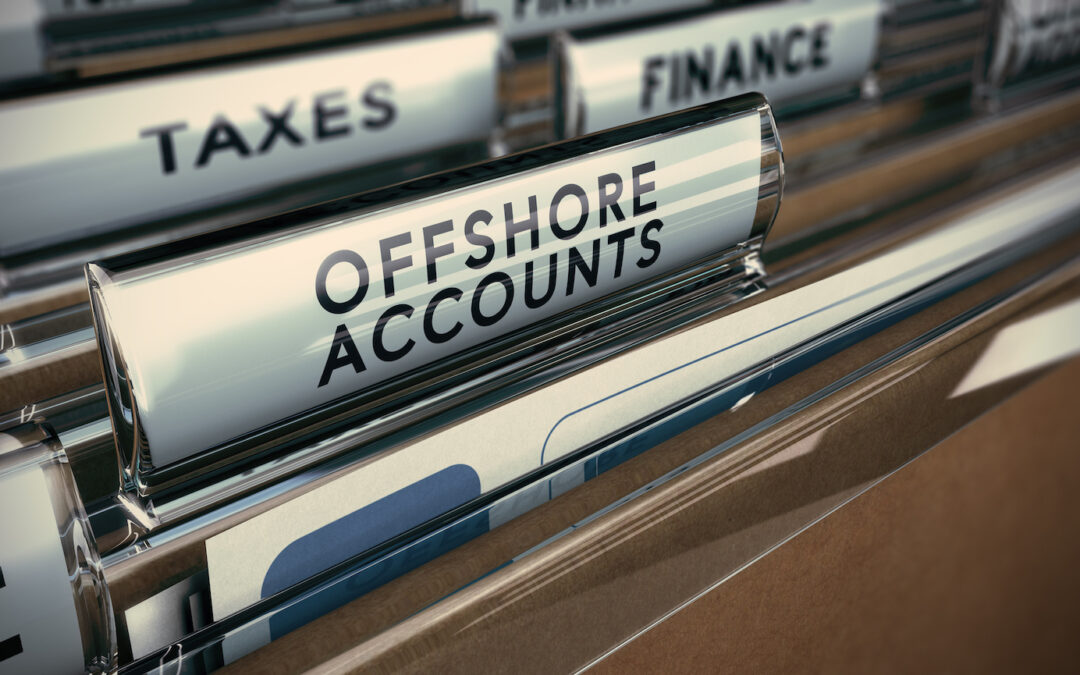
Many businesses never even consider the possibility of offshore accounts, and in most cases, it’s because they don’t understand how these accounts work or the benefits they offer. There’s also a misconception that such accounts are only for companies with excessive cash reserves.
However, these myths could be holding you back from making a savvy business decision. Here are a few important factors regarding offshore business accounts that could change your mind.
1. Dilution
As a business owner, you want to do everything you can to minimize risk. You’ve no doubt heard the saying about having all your eggs in one basket, and it can certainly apply to your business finances.
You don’t necessarily have to place all of your funds in offshore accounts, but diluting your risk by keeping money in several different types of accounts is wise, and offshore bank accounts can be part of that strategy. This is not only a smart financial move, but also a political one.
2. Asset Protection
One great reason to place money in domestic accounts is to gain Federal Deposit Insurance Corporation protections against loss. Unfortunately, these measures don’t protect your money from lawsuits.
Money held in offshore accounts is not necessarily beyond the reach of collectors, but it makes for a much harder target for seizure. You may become the victim of frivolous lawsuits or other financial attacks – offshore accounts can help you to stay afloat until such matters are resolved.
3. Minimum Deposits
Some offshore banking organizations do require minimum funds that smaller businesses will have trouble coming up with. However, this is not true in all cases, contrary to popular belief.
You’ll have to do some research to find the offshore banking institution that’s right for your company, but you can find banks that ask for deposits as low as $500-1,000 (USD) to open an account.
4. Remote Banking
The growth of online operations, including communications and security, has made remote banking not only possible, but relatively safe and reliable these days. As a result, you can open and manage your offshore accounts in a completely remote capacity, easily accessing funds that are held overseas. You can also hire a trusted management firm such as First Anguilla Trust to handle the day to day operations.
5. Fees = Guarantees
The major drawback of offshore banking for the uninitiated centers on the fees associated with many transactions. However, it’s important to understand the trade-off.
Offshore banks make their money not from lending, but from transactions and monthly fees. As a client, you’ll pay for services, but because your money is not lent out, it is always available, in full, when you need it. That’s a guarantee you won’t get from standard banks.
For more information regarding offshore accounts and banking, get in touch with us at 1-264-461-8800 or crgumbs@firstanguilla.com.